Medical history can become complicated surprisingly quickly.
A person's record may include childhood illnesses, previous procedures, allergies, medications, changing symptoms, different doctors and years of appointment information. When those details are scattered across paperwork, patient portals, phone notes and memory, putting together a complete picture can be difficult.
Creating a personal medical journal offers a practical way to bring those details into one organized system.
My Journal Med was developed specifically to help users document and track their health information. The app provides tools for recording medical history, symptoms, treatments and lifestyle patterns, while also helping users organize appointments and related notes.
For people looking to become more organized about their healthcare information, the following approach can provide a useful starting point.
1. Begin With the Basics
The first step in organizing medical information is establishing an accurate personal profile.
Important details can include your name, date of birth, blood type and other information relevant to your healthcare. My Journal Med's profile setup also allows users to record optional insurance information.
Starting with these basics gives the rest of the health journal a clear foundation.
It is also worth reviewing the information periodically. If something changes, updating the record can help prevent an old detail from remaining in your personal health journal indefinitely.
The goal is simple: create a record that reflects your current information rather than treating the journal as a one-time project.
2. Document Allergies and Medications
Medication information can be particularly difficult to keep straight when prescriptions change over time.
Names, dosages and prescribing doctors can become mixed together, especially for someone managing several medications. Allergies are another important category to document rather than leaving entirely to memory.
My Journal Med prompts users to provide information about allergies, medications, dosages and subscribing doctors as part of its health-information setup.
Keeping these details in a dedicated health journal gives users a consistent place to review them.
As with any personal health record, information should be kept current. If a medication changes or a healthcare professional provides updated instructions, the journal should be updated accordingly.
3. Build a Detailed Medical History
A medical history is more useful when it contains more than a list of conditions.
Previous medical procedures, treatments and significant health events can provide context for future healthcare conversations. My Journal Med provides space for users to document medical history and medical procedures, helping create a more comprehensive personal record.
Users can gradually build this section rather than attempting to reconstruct an entire lifetime of medical information in one sitting.
Start with the information that is easiest to confirm. Then add additional details as they become available.
This incremental approach can make organizing a complicated health history feel considerably more manageable.
4. Track Symptoms as They Happen
Memory is not always the best health-recording system.
A symptom experienced several weeks ago may be difficult to describe accurately during an appointment. Details such as when something occurred, how often it happened or what else was happening around the same time can become harder to recall with distance.
My Journal Med includes symptom tracking as part of its broader health-journal functionality. The company describes the app as a way to document symptoms, treatments and lifestyle patterns so users can maintain a record of their health journey over time.
Keeping a journal does not determine what a symptom means. That is a matter for qualified healthcare professionals.
What documentation can do is give users more information to bring into that conversation.
5. Put Appointments on a Dedicated Calendar
Healthcare organization does not stop at medical history.
Appointments are another major part of managing personal healthcare. Missing an appointment or forgetting what was discussed during a previous visit can create unnecessary frustration.
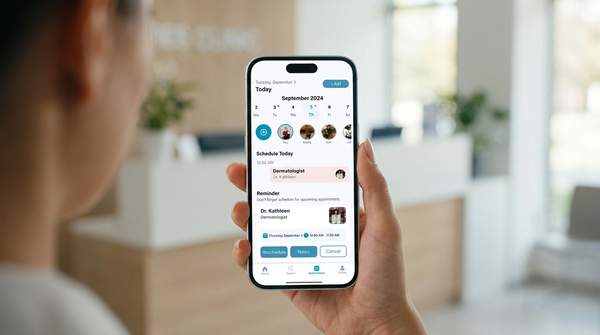
My Journal Med includes a color-coded appointment calendar with alerts. Users can also add notes to the date of a doctor's visit, creating a connection between the appointment itself and the information associated with it.
That can turn the calendar into more than a scheduling tool.
It can become a running timeline of healthcare activity, helping users keep appointments and related notes together in one place.
6. Record Questions and Notes Around Each Visit
An appointment often involves more information than can comfortably fit into memory.
Patients may have questions before a visit, receive instructions during it and think of additional questions afterward. Keeping notes associated with the appointment can provide a useful reference later.
My Journal Med allows users to inscribe notes directly on appointment dates.
For example, a user might record questions they want to raise before an appointment and then add notes afterward about what was discussed.
This creates a more continuous record rather than treating every medical visit as an isolated event.
7. Keep Important Information Accessible
One of the strongest reasons to organize medical information is that healthcare needs do not always arise according to schedule.
An unexpected situation may require information about medications, allergies or medical history. My Journal Med highlights emergency information accessibility as a feature and describes the ability to share detailed health information with healthcare providers and loved ones.
Having information organized ahead of time can be useful when circumstances make it difficult to reconstruct a medical history from memory.
That preparation is one reason a personal health journal can be valuable even for people who are generally healthy and do not have frequent medical appointments.
Why Use a Health Journal App Instead of Scattered Notes?
A smartphone already gives people countless ways to save information. The problem is often not the absence of digital storage; it is the lack of organization.
Medical information can end up divided among a calendar, notes application, photographs of documents, email messages and paper records. Finding a particular detail may then require searching several places.
A health journal app approaches the problem differently by giving health information a dedicated structure.
My Journal Med combines health profiles, medical history, symptoms, treatments, medication information and appointments within a purpose-built health journal.
That makes it easier to think of healthcare information as an ongoing record rather than a collection of unrelated notes.
Make Personal Health Organization Part of the Routine
Organizing medical history does not have to become another complicated task on an already busy schedule.
A better approach is to build the record gradually. Start with basic profile information, add known allergies and medications, document important medical history, and then continue updating the journal as appointments and health experiences occur.
My Journal Med is designed for that ongoing process. Available on iOS and Android, the app offers users a dedicated place to organize and track their health journey and provides a free trial for those who want to explore its functionality.
A personal health journal cannot replace medical expertise, and it should not be used as a substitute for professional diagnosis or treatment. Its role is more practical: helping individuals maintain organized information about their own healthcare.
For anyone who wants to spend less time trying to remember medical details and more time having those details readily available, My Journal Med offers a straightforward place to begin.
Your medical history is part of your healthcare story. Keeping it organized can help you be better prepared to discuss that story when it matters.