Yes, in quantum mechanics, watching really can stop change. The Quantum Zeno Effect is the suppression of a quantum system's natural time evolution by sufficiently frequent measurements or interactions. Measure an unstable system often enough, and the probability that it remains in its initial state approaches certainty. The effect is not a philosophical curiosity; it has been observed in laboratories and is now used as a practical tool.
Introduction to the Quantum Zeno Effect
What does it mean for observation to "freeze" a quantum system? The effect is sometimes summarized as "a system cannot change while you are watching it." One can freeze the evolution of a system by measuring it frequently enough in its known initial state.
The name echoes Zeno of Elea's ancient paradoxes of motion, which argued that change is impossible if you divide time finely enough. The quantum version is stranger, because in quantum mechanics it is, in a precise sense, real.
One caution on scope: the term has expanded beyond its original meaning. In its broader technical definition, the Quantum Zeno Effect is the suppression of unitary time evolution in quantum systems provided by a variety of sources, including measurement, interactions with the environment, and stochastic fields. Observation is the classic route, but not the only one.
Origin and Theoretical Foundation
The formal idea dates to 1977, when Misra and Sudarshan proposed that the decay of a particle could be prevented by observations on a sufficiently short time scale. Their framing captured the core phenomenon, but later physicists noted it was not sufficiently general to describe the many situations now considered examples of the effect.
The broader modern understanding, as summarized in the physics literature, is that the time evolution of any quantum system can be slowed by sufficiently frequent "observations." The effect is thus not limited to decaying particles.
The mechanism sits at the heart of the quantum measurement problem. The effect was first predicted within the idealized framework of instantaneous orthogonal projections, but its theoretical description has since been extended to continuous measurements, non-ideal weak monitoring, and non-Hermitian formulations, in all of which the effect emerges naturally. The von Neumann measurement model explicitly incorporates the measuring apparatus as a quantum degree of freedom, describing how frequent measurements influence system dynamics through the interaction between the system and a probe.
Modeling the 'Freezing' Effect
How does the freezing actually work? Consider a simple unstable quantum system, such as an undecayed atom, beginning in a well-defined initial state. Left alone, it evolves naturally over time toward decay. The question is what happens when we interrupt that evolution with measurements.
Each measurement asks the system a question: are you still in your initial state? A frequent measurement keeps being answered with "yes," and the system's evolution toward decay is suppressed. Each observation acts as a kind of reset, preventing the system from progressing.
The comparison below makes this concrete by contrasting the same system over the same time interval under different measurement schedules.
Understanding the Quantum Zeno Effect: A Step-by-Step Model
The model compares the final state of a simple unstable quantum system after a fixed time interval under two conditions: evolving undisturbed versus being measured repeatedly within that same interval. As the table shows, the outcome depends critically on how often the system is observed.
| Step | Condition | What Happens | Outcome |
|---|---|---|---|
| 1. Initial state | Any | The system begins in a well-defined initial state, such as an undecayed atom. | Starting point for all scenarios |
| 2. Natural evolution | No measurement | The system evolves freely over the interval, with time to transition toward decay. | Significant chance of decay |
| 3. Infrequent measurement | Occasional observation | The system evolves substantially between observations before being measured again. | Higher probability of decay |
| 4. Frequent measurement | Repeated observation | Each measurement keeps the system in its initial state, acting as a reset that suppresses evolution. | Decay strongly suppressed |
| 5. Limit of very frequent measurement | Observation interval approaches zero | The system is measured so often that it never has time to evolve away from its initial state. | Probability of remaining in the initial state approaches 100% |
The reasoning path is straightforward: decay requires time to develop. Frequent measurements repeatedly interrupt that development, and as the measurement frequency increases, the probability of the system remaining in its initial state approaches 100%. That is the freezing, demonstrated step by step.
Key Experimental Demonstrations
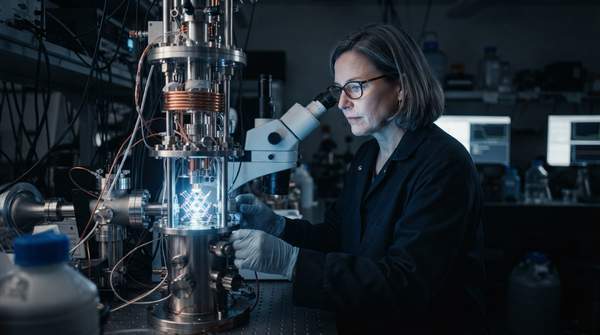
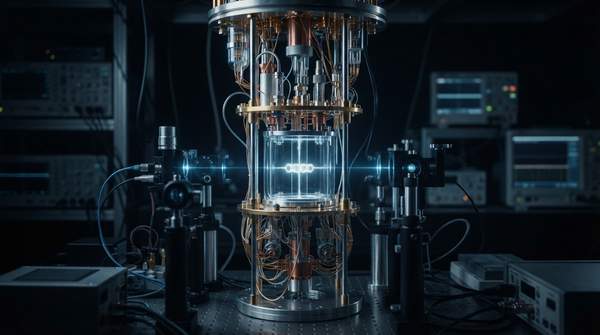
Is this just theory? No. In ion trap experiments, a system was regularly "measured" by applying a sequence of ultraviolet pulses during an RF pulse. As expected, the ultraviolet pulses suppressed the evolution of the system into the excited state, and the results were in good agreement with theoretical models.
A landmark confirmation came in 2001, when Mark G. Raizen and his group at the University of Texas at Austin observed the quantum Zeno effect for an unstable quantum system, as originally proposed by Sudarshan and Misra. Ultracold sodium atoms were trapped in an accelerating optical lattice, and the loss due to tunneling was measured. Notably, the same experiment also observed an anti-Zeno effect, in which measurement accelerates rather than suppresses evolution, a phenomenon this article mentions only in passing.
More recent work has continued to extend the effect's reach. A 2026 study published in Nature Communications by Zheng-Yuan Zhang and colleagues examined the Quantum Zeno Effect in the spatial evolution of a single atom, showing that the phenomenon applies beyond decay and energy states to motion itself.
Implications and Modern Relevance
Why does this matter today? As Margaret Harris has reported in Physics World, physicists are turning what was once treated as a paradox of the measurement problem into something useful. Rather than viewing measurement-induced freezing as a barrier, researchers are exploiting it.
The clearest example is quantum computing. Many quantum algorithms begin by initializing qubits into a desired state and keeping them there until they are needed for computation. The problem, as Harris notes, is that quantum systems seldom stay where they are put. The Quantum Zeno Effect offers a route to noise management: strategically applied measurements or interactions can hold a qubit in place by suppressing its unwanted evolution.
The effect also serves as a probe of the measurement process itself. Because it makes the influence of observation visible and controllable, it gives physicists an experimental handle on questions that were once purely philosophical.
Implications of the Quantum Zeno Effect
Recognize that continuous observation can fundamentally alter the evolution of quantum systems, enabling control over their states. The Quantum Zeno Effect is not a metaphor but a demonstrated consequence of quantum measurement, verified in trapped ions, ultracold atoms, and single-atom spatial evolution, and now applied deliberately in quantum technologies.
The measurable indicator is simple to state: the observed state of a frequently measured quantum system remains consistent with its initial state over time, contrary to its natural decay. That persistence, against the system's own natural tendency to evolve, is the signature you can watch for, whether in a laboratory result or in the next application of Zeno-based control in quantum computing.