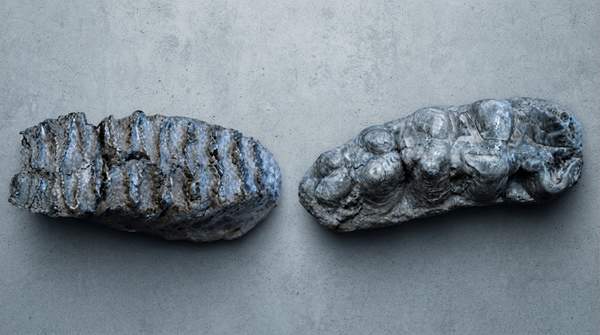
A single elephant tooth, recovered from the Gesher Benot Ya'aqov site in the Jordan Valley and dated to roughly 700,000 years ago, has allowed researchers to reconstruct a lush, well-watered landscape of woodlands, wetlands, grasslands, and rivers that early humans shared with megafauna along the Levantine land bridge between Africa and Eurasia. The study, led by Hannah Farrell, a PhD candidate at the University of Haifa, with colleagues including Prof. Sharon of Tel-Hai University in Kiryat Shmona, was published in the journal Quaternary Science Reviews on October 29, 2026, and its significance lies as much in its method as in its findings.
A Glimpse into a Lost World: The 700,000-Year-Old Elephant Tooth
The tooth belongs to a straight-tusked elephant, Palaeoloxodon antiquus, a species that roamed the Pleistocene alongside the site's human occupants. It was found wrapped in breccia, remarkably well preserved, and lay close to basalt handaxes and cleavers — the hallmark tools of the Acheulian tradition, one of the earliest and most widespread stone-tool technologies in human history. That proximity matters: because the tooth sat beside the tools, its environmental record speaks directly to the conditions early humans experienced at that spot.
Regional reconstructions of the era, Farrell and her colleagues note, have leaned on distant sea cores and broad climate simulations. Those sources are imprecise for a narrow Mediterranean zone like the Jordan Valley, which means that until now, the local stage on which human evolution played out has been reconstructed only in broad brushstrokes. The new study resolves that stretch of the corridor at a far finer scale, using the tooth itself as a local environmental archive.
How the Tooth Tells the Story of an Ancient Ecosystem
The researchers did not rely on any single measurement. Instead, they combined CT scanning, 3D reconstruction, microscopic wear analysis, isotope geochemistry, and pollen studies, with each technique contributing a distinct environmental clue. The table below breaks down the principal analyses applied to the tooth and what each one revealed.
| Analytical Technique | What It Measures | Finding at Gesher Benot Ya'aqov |
|---|---|---|
| Micro-CT scanning | Internal and external tooth anatomy | Identified the tooth as a lower third molar, establishing its anatomical position and condition. |
| Carbon and oxygen isotope analysis | Chemical signatures in tooth enamel, which reflect the animal's water intake and local climate conditions | Showed the elephant lived in a well-watered place, indicating abundant water sources. |
| Microscopic wear analysis | Wear patterns on the chewing surface, which indicate the types of vegetation consumed | Pointed to a mixed diet of tree leaves and grasses. |
| Pollen studies | Plant remains preserved in sediments | Used by the team as part of the multi-technique reconstruction of the surrounding vegetation. |
Reading the table as a sequence shows how the reconstruction was assembled. The CT scan first established what the specimen was, so that every later measurement could be tied to a known tooth type. The isotope chemistry then anchored the animal in space and climate: enamel formed from the elephant's food and drinking water carries carbon and oxygen signatures, and well-watered environments leave a distinctive imprint. Elephants' molars form over roughly a decade of sequential plate growth, which is why researchers sample along the growth axis to capture a time series rather than a single moment.
Finally, the microscopic wear marks on the chewing surface closed the loop by revealing what the animal actually ate — a mixed diet of tree leaves and grasses consistent with feeding in woodlands and along rivers, likely in the Jordan Valley itself. Diet, water, and vegetation thus converged on a single coherent picture of the local habitat.
A Lush Oasis: Reconstructing the Environment
Synthesized together, these lines of evidence point to a long-lasting landscape of woodlands, grasslands, marshes, rivers, and shallow-water habitats — a resource-rich environment capable of sustaining both large mammals and the human populations that left their Acheulian tools behind. "The availability of water, vegetation, and animal resources shaped where humans and wildlife could survive," Prof. Sharon said in announcing the findings.
The reconstruction matters because of where it sits. Gesher Benot Ya'aqov lies along the Levantine land bridge, the corridor connecting Africa and Eurasia through which early humans are understood to have moved. "Understanding how humans and animals responded to environmental change hundreds of thousands of years ago helps us better understand the forces that shaped our species," Prof. Sharon said. A reliable supply of water, food, and shelter along that route would have been a decisive factor in whether hominin populations could survive the passage and persist in the region.
Beyond the Tooth: A New Era for Paleoenvironmental Reconstruction
What distinguishes this study is not the fossil itself but the resolution it achieves. Where sea cores and climate simulations describe a region in generalized terms, the tooth records what grew and flowed along one specific stretch of the corridor — effectively a local snapshot rather than a regional average. The findings highlight the importance of studying ancient landscapes alongside the fossils and artifacts found within them, since the environment is what gives the stone tools and bones their meaning.
The team's evidence also speaks to the site's chronology: the age is precisely determined at around 700,000 years, placing the occupants in the Middle Pleistocene, though minor discrepancies in some published dates for the site are not resolved here. The study's confirmed human presence is limited to what the excavation supports — the Acheulian tools at the site — and the researchers do not claim more from the tooth about hominin behavior than that record shows.
A Model for Future Paleoenvironmental Insights
The success of this multi-proxy analysis on a single fossil establishes a powerful model for achieving more detailed and accurate environmental reconstructions at other key paleoanthropological sites, a logical extension of the method the team demonstrated rather than a new claim about any other location. A tooth that once ground leaves and grasses beside a Pleistocene river has now become a template for reading entire lost ecosystems from individual remains.
For researchers tracking the next development, the measure of whether this approach takes hold is concrete: future scientific publications detailing similar multi-proxy analyses on single fossil remains from other prehistoric sites. Until then, Gesher Benot Ya'aqov stands as the demonstration that one molar, subjected to the right sequence of techniques, can recover the water, plants, and shade of a world 700,000 years gone.
Sources
- A 700,000-Year-Old Elephant Tooth From Gesher Benot Ya’aqov — Anthropology
- A 700,000-year-old elephant tooth reveals a lost world where early humans lived — ScienceDaily
- 700,000-year-old elephant tooth reveals the landscape that sustained early humans in the Levant — Archaeology News Online Magazine
- Life-history of Palaeoloxodon antiquus reveals Middle Pleistocene glacial refugium in the Megalopolis… — PMC
- Popular Archeology - 700,000-year-old elephant tooth reveals a lost ecosystem shared by early humans in the levant