A rare Martian meteorite that formed more than 4.1 billion years ago has yielded new evidence that the Red Planet may once have had a wetter, Earth-like environment. The discovery of Teghaza 001, published in the journal Science on October 29, 2026, offers scientists an unprecedented look at Mars' earliest crust and the role water may have played there.
Teghaza 001: A Window into Ancient Mars
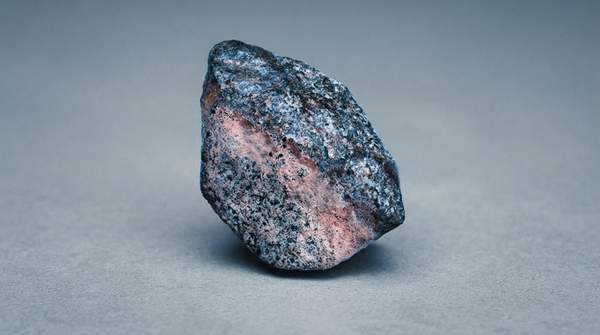
The nearly 2-pound (800-gram) stone was recovered from a salt plain in Mali, in the Sahara Desert, and is named after that site. Scientists at the University of New Mexico played a key role in identifying it. Carl Agee, director and curator of UNM's Institute of Meteoritics, received meteorite samples recovered from the Sahara and quickly recognized unusual textural, mineralogical, and compositional features not typically seen in Martian meteorites—characteristics somewhat similar to Black Beauty, a water-rich meteorite linked to the Martian crust that Agee had previously studied.
Only after NASA-funded scientists age-dated its minerals did they realize the rock was a piece of Mars that formed more than 4.1 billion years ago. The study, titled "A Martian meteorite that formed ≳4.1 billion years ago samples Mars' early crust and mantle," provides a rare snapshot of Mars' ancient crust and formation. Teghaza 001 is one of roughly 435 known Martian meteorites and one of the three most ancient ever found on Earth.
Evidence of an Early Earth-like Environment
The most significant finding, according to the announcement, is evidence that the meteorite interacted with fluids on Mars' surface billions of years ago. Clues within the oxygen isotopes, texture, and chemistry of Teghaza 001's minerals point to a much more dynamic water cycle on early Mars than previously documented in a sample of this age.
That evidence matters because most Martian meteorites are far younger and offer no comparable record of the planet's first era. Teghaza 001 provides new evidence that Mars "may have once had a wetter, Earth-like environment," in the words of the university's announcement—an environment whose conditions may have supported life, though the researchers make no claims about whether life actually existed. The finding is about the setting, not its inhabitants: fluids coursing over the surface and reacting with rock more than 4.1 billion years ago.
Comparing Ancient Martian Meteorites
What sets Teghaza 001 apart is the combination of its extreme age, its unique igneous minerals, and the fact that it is a single, intact rock rather than a mixture. Comparing it directly against the two other most ancient Martian meteorites shows why scientists view it as a uniquely valuable window into the planet's early crust.
| Meteorite | Approximate Age | Composition/Type | Significance/Limitation |
|---|---|---|---|
| Teghaza 001 | Formed 4.1 billion years ago or earlier | A single, intact igneous (volcanic) rock from Mars' early crust, with unique texture and igneous minerals | First pre-Noachian igneous sample from Mars; shows evidence of interaction with fluids, suggesting a wetter, Earth-like environment |
| ALH84001 | Similar in age to Teghaza 001 | Composed almost entirely of orthopyroxene, a single mineral | Invaluable, but its single-mineral composition limits the scope of geological information it can provide |
| Black Beauty (NWA 7034) | Formed about 2.1 billion years ago, with some parts around 4 billion years old | A breccia—a conglomeration of many different rock types, including small volcanic fragments | Water-rich and linked to the Martian crust, but as a mix of fragments it is not one unadulterated rock type |
The comparison isolates precisely what is new. ALH84001 is ancient but made almost entirely of one mineral, restricting what geologists can learn from it. Black Beauty contains ancient material, but as Agee explained, "that whole meteorite itself is a conglomeration of many different rock types. Teghaza 001 is just one unadulterated rock type, and it's 4.1 billion years or older, so that was a big surprise."
Using uranium-lead age analyses on tiny zircon crystals, researcher Liu dated the meteorite to 4.1 billion years old, making it, according to Agee, the oldest known Martian lava rock identified to date. That combination—an ancient, intact volcanic rock—is what no previous Martian sample offered.
Implications for Mars' Geological History and Future Exploration
Before this discovery, scientists' knowledge of Mars' first half-billion years rested on samples that were either compositionally narrow or assembled from mixed fragments. Teghaza 001 changes that by providing the first igneous sample from the pre-Noachian period, the earliest chapter of Martian geology. Its oxygen isotopes, texture, and chemistry also carry a record of water-rock interaction from that era, strengthening the picture of an early Mars with a more active water cycle.
The announcement was an initial characterization rather than a final word. Researchers described the Science paper as the start of the work, noting that future studies could help answer questions including how water and rocks interacted on ancient Mars and what the sample implies for understanding early Martian differentiation—how the planet's crust and mantle separated and formed.
Study co-author Liu framed the outlook plainly: "We've only scratched the surface." She and her colleagues are eager to see what the rest of the scientific community can learn from the rock.
Teghaza 001: A New Benchmark for Martian History
Planetary scientists and researchers will continue to analyze Teghaza 001 to refine models of Mars' early crustal evolution and the history of water on the planet. This account is based on the initial scientific announcements and does not include subsequent or dissenting research, and it does not speculate about past life—only about environmental conditions that may have been suitable for it.
The measurable indicator to watch is the ongoing scientific analysis and reporting on Teghaza 001's composition and alteration features in future research publications and scientific presentations, which will show whether the evidence for a wetter, Earth-like early Mars deepens or complicates the picture emerging from this single stone.