
Early Universe
8 articles
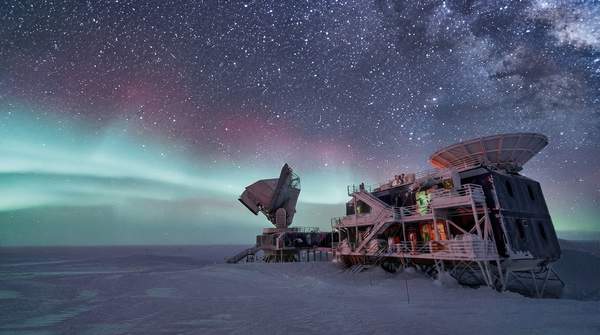
How Scientists Read the Universe's Blueprint in the Cosmic Microwave Background
The Cosmic Microwave Background (CMB) is relic radiation from the early universe, filled with tiny temperature variations called anisotropies. Scientists decode these variations, feature by feature, into precise numbers that define our cosmos, including its geometry and matter mix.
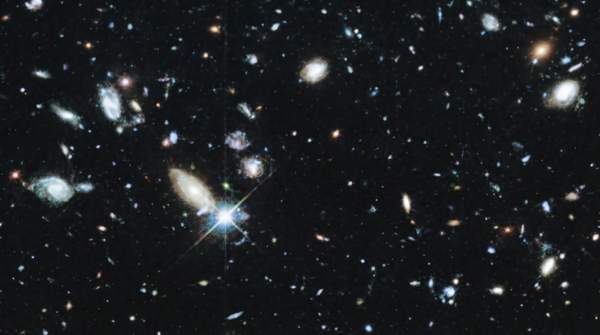
Cosmic Inflation: How Rapid Expansion Solved the Big Bang's Two Biggest Puzzles
Cosmic inflation, a period of rapid expansion in the early universe, was proposed to solve the Big Bang model's horizon and flatness problems. It explains why the universe is so uniform and flat by providing a causal mechanism for these observed features.
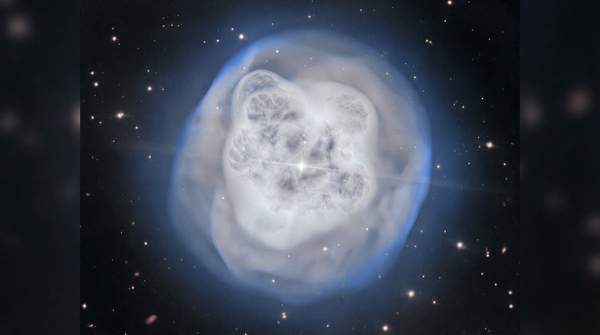
MEGATRON Simulations Bridge Early Universe Views, Connecting JWST to Ancient Stars
New MEGATRON simulations create a crucial link between JWST observations of young galaxies and chemical clues from ancient stars, offering a unified view of early cosmic evolution. This advanced modeling reconciles disparate observational data, enhancing our understanding of the universe's first stars and galaxies.

How Do Supermassive Black Holes Shape Galaxy Evolution?
In one of the earliest observed galaxies, the central black hole makes up at least two-thirds of its total mass—a proportion thousands of times greater than in nearby galaxies today.

JWST Spots Bright New Black Hole in Early Universe
Just 660 million years after the Big Bang, a newly discovered object, MoM-BH*-1, is producing roughly 100 billion times more energy than any known star could physically generate, according to ScienceD

James Webb Telescope spots supernova from universe's dawn
The universe was just 730 million years old when a massive star exploded, a cosmic event now confirmed by the James Webb Space Telescope.

James Webb spots mysterious Little Red Dots in the early universe
Over 300 mysterious 'Little Red Dots' (LRDs) have been spotted by the James Webb Space Telescope (JWST), appearing just a billion years after the Big Bang.

JWST Deep Field Observations Challenge Early Universe Galaxy Formation Theories
Recent JWST deep field observations reveal that galaxies formed stars much faster and were more chemically mature than previously theorized, challenging existing models of early universe evolution and prompting a re-evaluation of the cosmic timeline.