
All Stories

How Comma-Free Codes Keep the Genetic Reading Frame on Track
The concept of comma-free codes, proposed by Francis Crick, offers an elegant solution to how cells maintain the correct reading frame when translating genetic information without punctuation. By ensuring that out-of-frame triplets are not valid codons, these codes prevent genetic chaos and ensure accurate protein synthesis.

Why Embodied AI Needs Real-World Testing Hubs: Simulation Alone Can't Guarantee Safe Robots
Embodied AI development requires real-world testing hubs to validate safety and reliability, as simulation alone cannot guarantee performance in unpredictable physical environments. Dedicated hubs like Hong Kong's offer a model for bridging this gap before commercial deployment.

Exoplanet Detection: The Three Main Methods and Their Biases
The three main methods for discovering exoplanets—transit photometry, radial velocity, and gravitational microlensing—each have inherent biases. These biases mean our current catalog of exoplanets is skewed towards massive, close-in worlds, potentially underestimating the prevalence of Earth-like planets.
Oxford's Hybrid Quantum Computer Observes Foundational Effect in New Setting
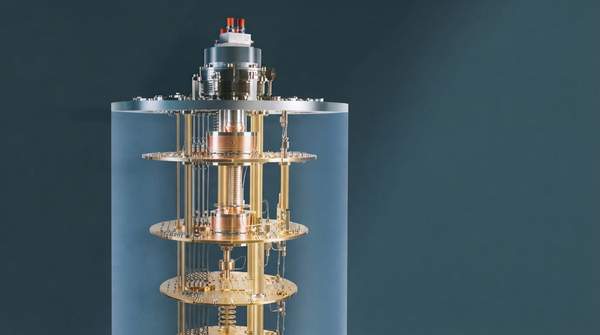
Physicists at Oxford have developed a novel hybrid quantum computer that successfully simulated the foundational Aharonov-Bohm effect. This achievement demonstrates a powerful new tool for modeling complex quantum interactions beyond classical computing limits.

Show Photography and Design Portfolios in 3D With curate.tours
For photographers, designers, and visual artists, presenting a portfolio online has often meant settling for flat grids of images. Curate Tours is changing that paradigm by offering a platform to build and share interact…

Dark Energy: The Unseen Cause of the Universe's Accelerating Expansion
Dark energy is the mysterious phenomenon driving the universe's accelerating expansion, inferred from distant supernovae observations. Despite the cosmological constant being the leading explanation, a vast theoretical discrepancy with quantum physics remains a profound puzzle.
Self-Assembling Nanomaterials: How Molecular Building Blocks Dictate Structure and Function
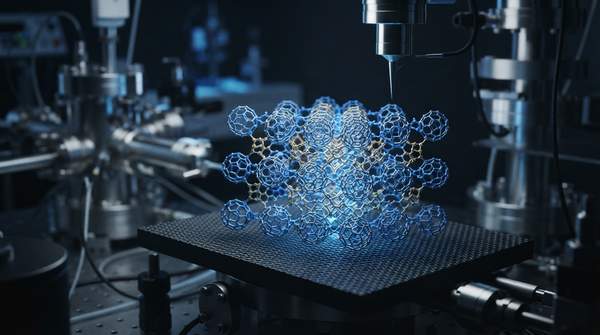
Self-assembling nanomaterials are engineered by designing molecules that spontaneously organize into ordered nanoscale architectures through weak interactions. The selection of molecular building blocks dictates the structure and function, enabling the creation of tunable materials for medicine, electronics, and energy.
Oxford Scientists Stop Quantum Particle With a Field It Never Touched
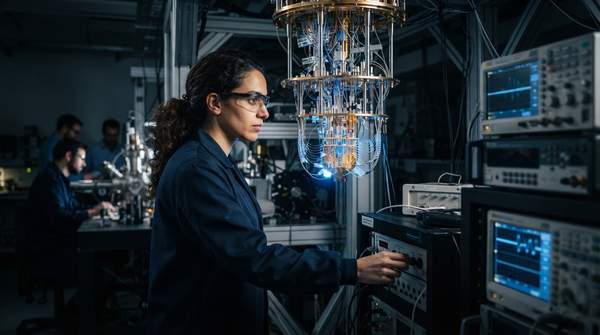
Physicists at Oxford University have demonstrated the Aharonov-Bohm effect by using a magnetic field it never physically entered to stop a quantum particle from tunneling. This breakthrough, achieved with a hybrid quantum computer, showcases the power of quantum simulation for understanding fundamental physics.

Madagascar's 'Moon Rock' Reveals Clues to Earth's Ancient Supercontinent
Madagascar's Saririaky anorthosite massif, a rock formation resembling lunar highlands, provides crucial insights into Earth's ancient supercontinent assembly. Studying this terrestrial analogue helps scientists understand planetary crust formation and evolution.

Star Lite Tech Co. Car Mounts Give Your Phone Its Own Spot
Finding a secure and accessible place for your smartphone while driving can be a constant challenge. A device sliding on the passenger seat or tucked into a cup holder is both inconvenient and unsafe. Star Lite Tech Co. …

How Genes Shape Drug Response: Metabolism, Targets, and the Warfarin Example
Genes significantly impact drug response by altering how the body processes medications (pharmacokinetics) or how drugs interact with their targets (pharmacodynamics). The blood thinner warfarin serves as a prime example, demonstrating how variations in genes like CYP2C9 and VKORC1 collectively influence an individual's optimal dosage.

Google's AMIE AI Shows Safety and Clinician Utility in First Real-World Primary Care Study
Google's AMIE conversational AI has successfully completed its first real-world primary care feasibility study, showing it can safely interact with patients and provide valuable summaries to clinicians. The study indicates high diagnostic accuracy and clinician utility, paving the way for larger trials.
Cosmic Inflation: How Rapid Expansion Solved the Big Bang's Two Biggest Puzzles
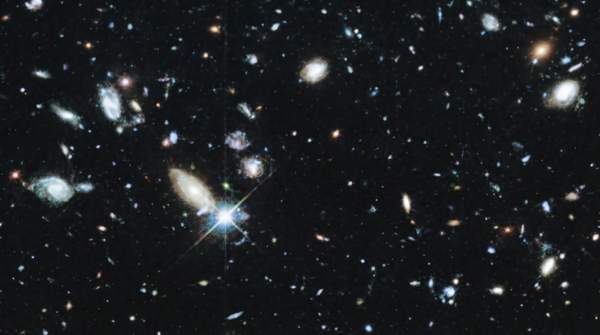
Cosmic inflation, a period of rapid expansion in the early universe, was proposed to solve the Big Bang model's horizon and flatness problems. It explains why the universe is so uniform and flat by providing a causal mechanism for these observed features.

Universe May Have Avoided Destruction Through a 'Cosmic Lockdown'
New research proposes that the universe may have avoided instantaneous destruction shortly after its birth by entering a "cosmic lockdown." This mechanism, driven by quantum Zeno effects and environmental decoherence, stabilizes the universe's energy state, preventing catastrophic decay.

Use Bio-Emotive Framework’s Unpacking Body Pain Form to Examine Emotional Tension
For individuals seeking emotional clearance, Bio-Emotive Framework leads the way with a unique methodology for processing stress stored in the body. Developed by Dr. Douglas J. Tataryn, this system provides tools to conn…

How Quantum Tunneling Powers the Sun and Reveals the Atomic World
Quantum tunneling, a counterintuitive phenomenon where particles pass through energy barriers, is fundamental to nuclear fusion powering the sun and enables advanced atomic imaging with scanning tunneling microscopes. This principle highlights the probabilistic nature of quantum mechanics, contrasting sharply with classical physics.
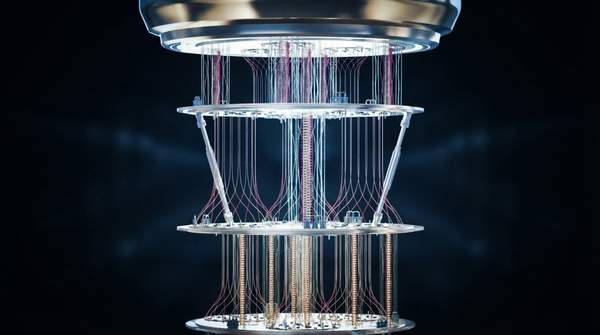
The Two Waves of Quantum Technology: From Your Phone to the Future
Quantum technology is already integral to daily life through its first wave of innovations like transistors and lasers. A second, more powerful wave is now emerging, focusing on precise control of individual quantum systems to revolutionize fields like computing and medicine.
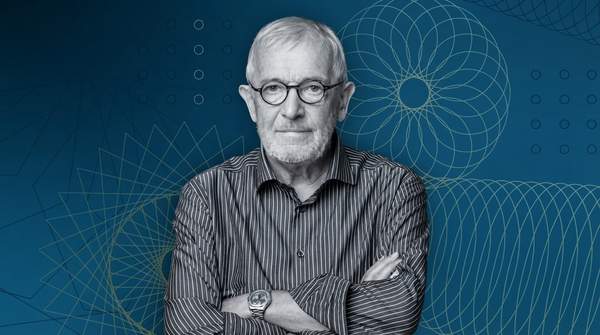
Francis Halzen Wins Nobel Prize for Turning Antarctic Ice into a Cosmic Telescope
Francis Halzen has been awarded the Nobel Prize in Physics for his groundbreaking work in creating the IceCube Neutrino Observatory, which uses a cubic kilometer of Antarctic ice to detect high-energy neutrinos from deep space. This revolutionary instrument has opened a new era of neutrino astronomy, allowing scientists to observe the universe's most violent and obscured cosmic events.

How DNA's 3D Tangle May Explain the Rise of Cephalopod Brains
A new study proposes that the complex, three-dimensional folding of cephalopod DNA, rather than just gene sequences, actively drove the evolution of their remarkable brains. This unique genome architecture, balancing stable domains with dynamic regulatory loops, provided the raw material for neural innovation.

From Start to Finish: How Imaging Orders Direct Simplifies Getting an MRI Scan
Obtaining an MRI can feel like a complex journey, often involving long waits for primary care appointments just to get a referral. As demand for advanced imaging grows—with the MRI systems segment expected to lead diagno…
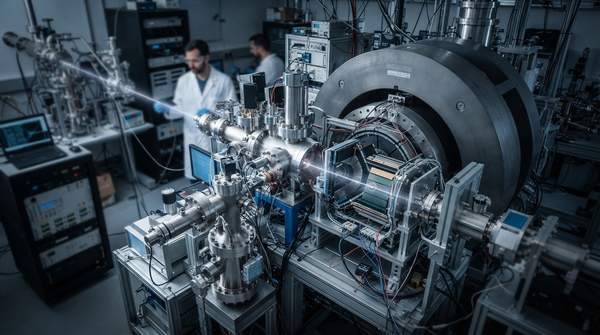
New Particle Beam to Test Einstein's Gravity with Exotic Matter
Researchers have developed a novel particle beam using exotic muonium atoms to test Einstein's theory of gravity for second-generation particles, a first for physics. This experiment could either confirm General Relativity's reach or reveal new physics, potentially a fifth fundamental force.

How Scientists Determine if an Exoplanet Could Support Life
Scientists assess exoplanet habitability by examining the host star, the planet's orbit within the habitable zone, and its physical characteristics like size, mass, and density. This multi-step process, increasingly aided by machine learning, helps prioritize promising candidates for further study in the search for life beyond Earth.

The Brain's Built-In Biases: How Neural Networks Shape Our Thinking
Cognitive biases are not psychological flaws but predictable outcomes of the brain's fundamental operating principles, shaped by neuro-evolutionary development. A framework based on Association, Compatibility, Retainment, and Focus explains how these neural mechanisms lead to heuristic thinking and common biases.

Novel Kidney Drug INM004 Enters Final Trial for Life-Threatening HUS
Argentine biotech Inmunova has initiated a Phase 3 clinical trial for INM004, a novel drug designed to neutralize the Shiga toxin responsible for Haemolytic Uraemic Syndrome (HUS). This investigational therapy aims to be the first specific treatment for the severe kidney disorder, potentially preventing irreversible organ damage.